The Strategic Plan Sitting on Your Shelf Isn’t Doing Anyone Any Good
Let’s say something that doesn’t get said enough in community development circles: strategic planning has a trust problem.
And honestly? It’s earned.
Too many communities have been through the process — the visioning sessions, the community surveys, the consultant presentations, the glossy bound document — and come out the other side with very little to show for it. The plan gets adopted at a board meeting, filed somewhere, and quietly forgotten as the day-to-day demands of running an organization or managing a community take over.
So when we talk about strategic planning at Thrive, we’re always starting from that reality. We’re not selling you on a process. We’re trying to help you do something that actually works — which requires being honest about why it so often doesn’t.
The Plan Isn’t the Point
Here’s the mindset shift that changes everything: the plan is not the product. The thinking is the product.
When strategic planning works, it’s not because the document was beautifully designed or because every goal had a SMART objective attached to it. It’s because the process forced a community or organization to have conversations it had been avoiding. To name tensions that had been unspoken. To get honest about what resources were actually available versus what everyone wished were available. To decide — really decide — what mattered most when everything couldn’t be a priority.
That kind of clarity is what makes a strategic plan useful. And you can’t shortcut your way to it.
This is why we’re skeptical of planning processes that move too fast, involve too few voices, or prioritize consensus over candor. A plan that everyone can agree on because it never says anything hard isn’t a strategy — it’s a press release.
What Good Strategic Planning Actually Looks Like
In our experience, the communities that get the most out of strategic planning share a few traits.
They treat it as a leadership process, not a documentation project. The planning process is where leaders align, build trust, surface disagreement, and work through it. That work — not the final document — is where the real value lives. The plan is the artifact of the thinking, not a substitute for it.
They involve people who will push back. The instinct in community planning is often to build a coalition of the willing — people who already support the vision and will move things forward. That’s important. But the most durable plans also include voices that will challenge assumptions, represent constituencies that are often overlooked, and ask uncomfortable questions early rather than letting those questions become obstacles later.
They plan for implementation from day one. Before the ink is dry on the strategic plan, the question should already be: who owns this, what resources are allocated to it, and how will we know if it’s working? Too many planning processes treat implementation as a separate phase that comes later. It shouldn’t be. If you don’t have a realistic path to execution, you don’t have a strategy — you have a wish list.
They revisit and revise. A strategic plan that’s treated as sacred and unchangeable becomes a problem fast. The communities we’ve seen navigate change well hold their plans with a kind of confident flexibility — committed to the direction, willing to adjust the route.
Why This Work Is Hard (And Why It Matters Anyway)
Community strategic planning is genuinely difficult. You’re asking people with different interests, different histories, and different relationships with power to come together around a shared vision for a place they all care about but may experience very differently.
That’s not a planning problem. That’s a human problem. And no facilitation technique or strategic framework fully resolves it.
What good planning does is create a structured space to work through it — with enough process to keep things moving and enough honesty to keep things real. When it works, you end up with more than a plan. You end up with a community that’s practiced the hard work of making decisions together. That capacity — to disagree well, to align around what matters, to hold each other accountable — is more valuable than any document.
That’s what we’re actually trying to build when we help a community plan.
What Thrive Brings to the Table
We’ve guided communities through strategic planning processes in contexts ranging from small rural towns with limited staff capacity to larger economic development organizations managing multiple initiatives at once. What stays consistent across all of them is our approach: we come in as partners, not experts with all the answers.
We do the analytical work — assessing strengths, mapping resources, benchmarking against comparable communities. We design and facilitate engagement processes that surface real input rather than just validating predetermined conclusions. We help translate community input into focused, actionable priorities. And we stay engaged through implementation, because a plan that gets handed off and forgotten isn’t something we’re willing to put our name on.
If your community has been through planning before and it didn’t deliver what you hoped — or if you’re starting fresh and want to do it right the first time — we’d genuinely love to talk.
Not a sales call. Just a conversation about where you are, where you want to go, and whether we’re the right fit to help you get there.
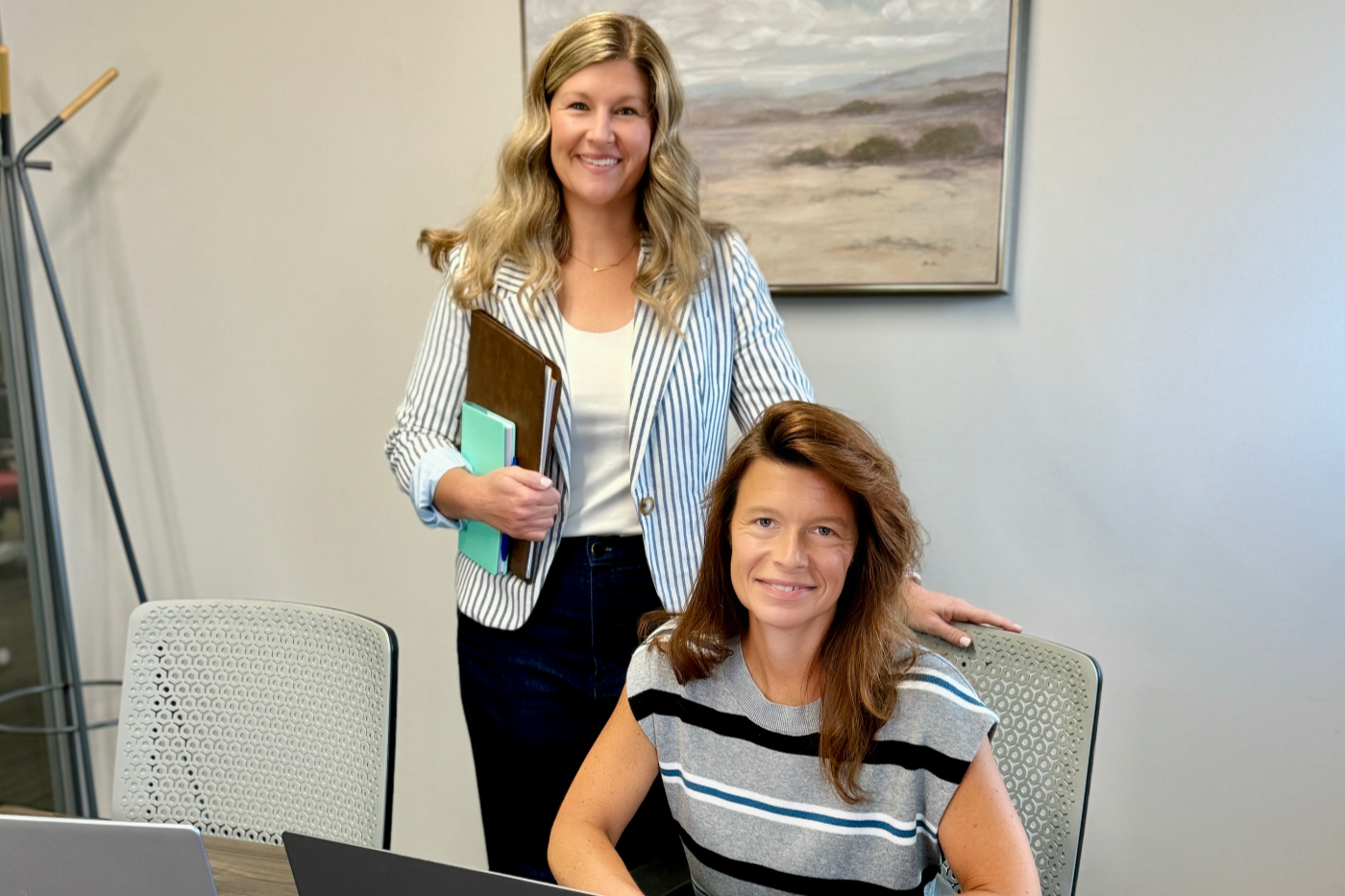
~ Renee & Sarah