Where to Find Grants
Here’s the honest truth about grant searching: the databases aren’t the hard part.
Grants.gov has over 1,000 active federal funding opportunities at any given moment. Candid’s Foundation Directory lists tens of thousands of grantmakers. There is no shortage of places to look. The overwhelm that most organizations feel isn’t from a lack of options — it’s from not knowing how to filter intelligently so they’re pursuing the right ones instead of all of them.That’s what we want to talk about today. Not just where the grants are, but how to actually find the ones worth your time.
Start With Your Work, Not the Database
This is the step that most guides skip entirely: before you open a single database, get clear on what you’re actually looking for.What is your organization trying to accomplish in the next 12–24 months? What specific populations or geographies does your work serve? What outcomes can you document? What phase of work needs funding — planning, implementation, evaluation, or capacity?The reason this matters: every major database lets you search by focus area, geography, and eligibility. If you don’t know your answers to those questions before you start, you’ll spend hours browsing and still come away with a list of grants that are only sort-of relevant. If you know your answers clearly, you can run a targeted search in 30 minutes and surface the opportunities that actually fit.This sounds obvious. Almost nobody does it.
The Funding Landscape: What’s Actually Out There
Once you’re clear about what you need, here’s how we think about the landscape.
Federal Funding
This is where the largest dollars live — and also where the most complexity lives. Grants.gov is the official source for federal opportunities, and it’s genuinely comprehensive. The challenge is that federal grants often require significant organizational infrastructure to manage: detailed reporting, auditing requirements, and compliance standards that can stretch a small team thin. If you’re a smaller organization, federal funding can be worth pursuing — but go in with clear eyes about the administrative load.One underused strategy: look at your state’s pass-through funding. Many federal programs distribute money to states, which then re-grant it to local organizations with lighter compliance requirements. Your state’s community development, workforce, or health agency may be distributing federal dollars with a process that’s much more accessible than applying directly to Washington.
Foundation Funding
This is where the landscape gets more interesting for most nonprofits and community organizations. Candid’s Foundation Directory (formerly Foundation Center) is still the gold standard for foundation research — it’s worth the subscription if you’re doing serious grant work. But here’s the thing most people don’t know: the best foundation relationships are often built before you ever submit a proposal.Many regional and community foundations actively want to connect with organizations doing strong local work. A 20-minute introductory call with a program officer can tell you more about fit than an hour of website research — and it can position you for a conversation-to-proposal path that’s far more successful than cold applications.
Corporate Funding
This is the most misunderstood category. Most corporate grants aren’t found on a database — they’re found through relationships. The local business that sponsors your event, the regional bank with a community investment program, the national company with a workforce development initiative that happens to align with your work. These are often smaller dollars, but they’re also faster, more flexible, and frequently renewable if the relationship is maintained.Don’t overlook your local chamber of commerce, community foundation, or economic development organization as a starting point for corporate connections. They know who’s investing locally.
The Tools Worth Knowing
If you’re building out a serious grant search process, a few platforms are genuinely useful:
Grants.gov remains the authoritative source for federal opportunities. Set up saved searches and email alerts so you’re not manually checking — opportunities move fast.
Candid / Foundation Directory Online is the most comprehensive foundation database available. If your organization does significant grant work, the annual subscription pays for itself quickly.
Instrumentl has become a favorite for organizations managing multiple grants at once — it combines opportunity search with application tracking, deadline management, and reporting reminders in one place. Particularly useful if your team is small and wearing multiple hats.
GrantWatch is a solid aggregator for federal, state, foundation, and corporate opportunities in one place. Good for smaller organizations that don’t need the depth of Candid but want more than Grants.gov alone.
One note of caution on tools: the database is only as good as the strategy behind the search. We’ve worked with organizations that had subscriptions to every major platform and still struggled with grant success — because they were using the tools to browse rather than to execute a focused strategy.
The Thing That Actually Changes Your Results
After years of doing this work, here’s what we know separates organizations that consistently win grants from those that struggle: they invest in funder relationships before they need them.They attend funders’ briefings. They go to community foundation events. They read funders’ annual reports to understand what worked and what they’re shifting away from. When a relevant RFP drops, they’re not starting from zero — they’re already known.That’s not something a database can build for you. It’s built the same way every meaningful professional relationship is built by showing up consistently, listening more than you talk, and demonstrating over time that your work is exactly what you say it is.If you’re just starting to build that kind of funder engagement, start local. Your community foundation, your regional United Way, your state’s economic development agency — these are relationships you can cultivate. And they often lead to national opportunities once you’ve established a track record.
How We Can Help
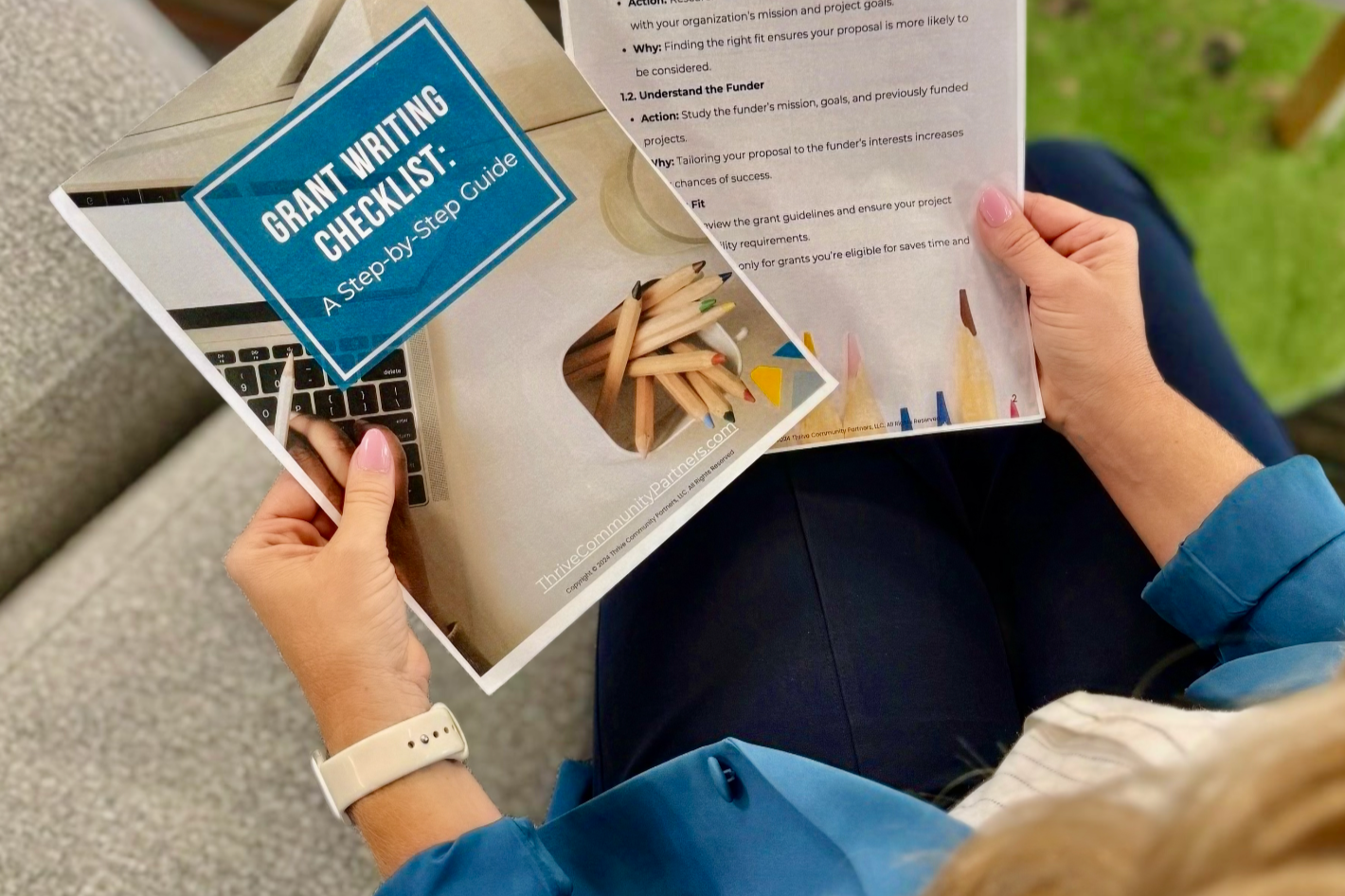
At Thrive, grant searching is only the beginning of what we do. We help organizations build the funding strategy that sits behind the search — so they’re pursuing the right opportunities at the right time, with proposals that truly reflect the quality of their work.If you’d like a starting point, our Grant Writing Checklist and How to Use Grants.Gov downloads can assist. And if you’re ready for a more hands-on conversation, we’re here for that too.
~ Renee & Sarah